Subscribe to updates
You'll receive weekly summaries about Worcestershire Council every week.
If you have any requests or comments please let us know at community@opencouncil.network. We can also provide custom updates on particular topics across councils.
Health Overview and Scrutiny Committee - Monday, 10th November, 2025 10.00 am
November 10, 2025 View on council website Watch video of meetingSummary
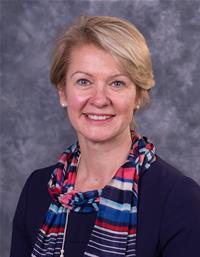
The Health Overview and Scrutiny Committee met on Monday 10 November 2025 to discuss an update from the Integrated Care Board, an overview of common neurological conditions, and the committee's work programme. Representatives from the NHS Herefordshire and Worcestershire Integrated Care Board (HWICB), Herefordshire and Worcestershire Health and Care Trust (HWHCT) and Worcestershire Acute Hospitals NHS Trust (WAHT) were expected to be in attendance. Councillor Karen May, Chair of the Health Overview and Scrutiny Committee, was scheduled to chair the meeting.
Integrated Care Board Update
The Health Overview and Scrutiny Committee was scheduled to receive an update from the NHS Herefordshire and Worcestershire Integrated Care Board (HWICB) following the government's announcement in March 2025 regarding changes to the management of Integrated Care Boards1 (ICBs) nationally. The HWICB Chief Executive was invited to answer questions from the committee.
The update included the ongoing national reforms to ICBs and their implications for the HWICB. The report outlined the national requirement for ICBs to reduce running costs, the key elements of NHS England's (NHSE) Model ICB Blueprint and the forthcoming 10-Year Health Plan for England2, and the progress of a clustering arrangement between HWICB and NHS Coventry and Warwickshire ICB (CWICB).
The report stated that HWICB is responsible for planning, commissioning, and overseeing the delivery of NHS services for the people of Herefordshire and Worcestershire. It allocates NHS resources, sets local health priorities, and works with partners across health and social care to improve outcomes and reduce health inequalities.
As part of the national reform programme, NHS England and the Department of Health and Social Care (DHSC) announced they would bring their operations closer together to reduce duplication and improve strategic alignment, which would ultimately result in the abolition of NHSE. As a result, all 42 ICBs were required to reduce their running costs by an average of 50% by the end of 2025/26. For HWICB, this translated to a 43% reduction, equivalent to approximately £12 million.
The report stated that the six ICBs in the West Midlands appointed Price Waterhouse Coopers (PwC) to undertake a detailed option appraisal to identify the most effective way to achieve the required cost reductions. The review identified that the strongest option was for three clusters of ICBs across the West Midlands, each grouping two existing ICBs. The proposal identified a partnership with NHS Coventry and Warwickshire ICB (CWICB) as the most effective model to achieve the required efficiencies and to deliver the new functions described in the national blueprint.
The six ICBs in the West Midlands are now arranged into three clusters:
- Herefordshire and Worcestershire with Coventry and Warwickshire
- Birmingham and Solihull with the Black Country
- Shropshire, Telford and Wrekin with Staffordshire and Stoke-on-Trent.
The Chair of HWICB was appointed to the role of Joint Chair across both ICBs from 1 October 2025, and the Chief Executive of HWICB was appointed as Chief Executive of CWICB, in effect becoming the 'Cluster CEO'.
The report clarified that the establishment of the cluster does not constitute a merger, and both ICBs remain legally separate entities, each with its own statutory duties and local accountability arrangements.
The Cluster Strategy is being developed to ensure that local focus remains at the core of the ICB operating model, focusing on:
- Developing local care collaboratives built around upper tier local government structures, with the County Council's members and staff having a pivotal role in the establishment and refinement of these collaboratives, building on the work that has been undertaken to date through the Worcestershire Place Partnership.
- A focus on Neighbourhood Health, with a neighbourhood health plan drawn up by local government, the NHS and its partners at single or upper tier authority level under the leadership of the Health and Wellbeing Board, incorporating public health, social care and the Better Care Fund3.
- Aligning the development of the ICB cluster with local authority development through the process of developing unitary councils and subsequently strategic mayoral authorities.
The proposed structure of the ICB Executive Team also ensures that a strong focus will remain on local issues, including two dedicated senior roles that will drive local work: a Deputy Chief Executive, and a Director of Integration.
The HOSC was asked to note the national ICB reform context and the progress of the HWICB and CWICB cluster arrangements.
Overview of Common Neurological Conditions
The Health Overview and Scrutiny Committee was scheduled to receive an overview of common neurological conditions as part of its Work Programme. Representatives from the HWICB, HWHCT and WAHT were invited to answer questions from the committee.
The report focused on Parkinson's and dementia, noting that the term 'neurological conditions' covers a wide range of conditions affecting the brain, spinal cord or nerves. The Neurological Alliance estimates that as many as one in six people in the UK lives with a neurological condition.
In Worcestershire, there are approximately 1,300 people living with Parkinson's, and it is estimated that there are more than 9,000 people living with dementia.
For Parkinson's care, diagnosis would follow an initial referral by the patient's GP to a Consultant Neurologist at Worcestershire Acute Hospitals NHS Trust. WAHT has a current workforce of eight substantive Consultant Neurologists who offer clinics in several different settings including the Alexandra Hospital in Redditch, Kidderminster Treatment Centre, Worcestershire Royal Hospitals as well as Evesham Community Hospital, Malvern Community Hospital and Pershore Medical Practice to provide care closer to home for patients who may find it difficult to travel. Waiting times for an initial appointment with a Consultant Neurologist in Worcestershire is typically 20 weeks for a new outpatient appointment.
Community support for Parkinson's patients is provided by the Herefordshire and Worcestershire Health and Care Trust's Parkinson's Clinical Specialist Nursing Service. The team maximises functional independence by promoting selfmanagement, with the overall aim to enhance the individuals' quality of life. The HWHCT Specialist Community Nursing Team currently receive between 20 25 new referrals every month, and has a caseload of more than 1,300 patients.
Dementia services in Worcestershire are provided by Herefordshire and Worcestershire Health and Care NHS Trust (HWHCT). It is estimated that there are 9604 people living with dementia in Worcestershire. The following services are offered to patients in Worcestershire: Early Intervention Dementia Services (EIDS), Older Adult Community Mental Health Teams (OACMHT), Admiral Nurses, Hospital at Home Team, and Specialist Inpatient Wards.
People with Dementia and their carers are actively involved in the transformation and commissioning processes through representation at a number of workstream groups, e.g. Dementia Partnership, Dementia Programme Board, as well as coproduction of the Dementia Strategy for Herefordshire and Worcestershire. A revised ICB Dementia Strategy will be published in early 2026, setting out the improvements for the next five years.
The HOSC was asked to consider and comment on the information provided on Parkinson's and Dementia and determine whether any further information or scrutiny on a particular topic is required.
Work Programme
The Health Overview and Scrutiny Committee was scheduled to review its work programme and consider which issues should be investigated as a priority.
The HOSC is responsible for scrutiny of local NHS bodies and health services (including public health and children's health).
The Work Programme was attached as an appendix to the Work Programme report.
The HOSC was asked to consider the 2025/26 Work Programme and agree whether it would like to make any amendments, retaining the flexibility to take into account any urgent issues which may arise.
-
Integrated Care Boards (ICBs) are statutory bodies that bring together NHS organisations and local authorities to plan and deliver joined up health and care services to improve the lives of people in their area. ↩
-
The 10-Year Health Plan for England is a government initiative that sets out the long-term vision for the NHS, focusing on prevention, community care, and digital transformation. ↩
-
The Better Care Fund is a government initiative that aims to join up health and social care services to improve outcomes for people in local communities. ↩
Attendees


Topics
No topics have been identified for this meeting yet.