Subscribe to updates
You'll receive weekly summaries about Derbyshire Council every week.
If you have any requests or comments please let us know at community@opencouncil.network. We can also provide custom updates on particular topics across councils.
Extraordinary meeting, Council - Thursday, 13 November 2025 4.00 pm, NEW
November 13, 2025 View on council website Watch video of meetingSummary
The council met to discuss and vote on a recommendation to be put to the cabinet regarding local government reorganisation, and ultimately voted to support a single unitary council for the whole Derby and Derbyshire area. The council also agreed to delegate authority to the Interim Chief Executive, Simon Stevens, in discussion with Councillor Alan Graves, Leader of the Council and Cabinet Member for Strategic Leadership, to make any amendments and additions to the submission document following feedback from the full council.
Here's a breakdown of the key discussion points:
Local Government Reorganisation
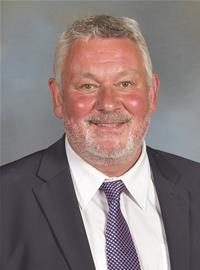
Councillor Alan Graves, Leader of the Council and Cabinet Member for Strategic Leadership, introduced a report updating the council on the Local Government Reorganisation (LGR) since the last full council meeting on 9 July 2025. The report asked members to note the key findings of the analysis undertaken to assess LGR options against government criteria, and to support the recommendation that the cabinet should submit a single unitary council proposal to the government.
The council had previously considered four unitary models for LGR in the Derby and Derbyshire area:
- Option 1: Single Unitary Model; Whole County
- Option 2: Two Unitary Model; North and South on District boundaries
- Option 3: Two Unitary Model; North and South on Non-district boundaries
- Option 4: Three Unitary Model; West, East and South.
Following discussion, the preferred option of a two unitary authority model for Derbyshire and Derby City on a north/south configuration was agreed to be carried forward for further analysis, alongside a period of key stakeholder and public engagement.
Public engagement was conducted over a four-week period from 23 July 2025 to 19 August 2025 to capture the views of residents, businesses, organisations and stakeholders on the three north/south split configurations under consideration at the time. Key stakeholders such as the East Midlands Combined County Authority (EMCCA)1, Police and NHS partners, as well as MP's and local businesses were also asked for their views as part of key stakeholder engagement. Analysis of the stakeholder engagement concluded that there was limited agreement from key stakeholders regarding any of the preferred options under consideration. Feedback highlighted strong support for improved efficiencies and service delivery, the safeguarding of public services, and the need for transparency and robust representation.
In response to the feedback, the council decided to include a single unitary model for Derby and Derbyshire as part of the detailed options appraisal, alongside the three previously proposed two-unitary authority models.
Since the engagement exercise closed, analysis has been undertaken to further investigate the benefits, costs and risks across the option models for the Derby and Derbyshire area. The options under consideration were:
- Option A Two Unitary Model North/South, Amber Valley North
- Option B Two Unitary Model North/South, Amber Valley South
- Option C Two Unitary Model North/South, Amber Valley and Derbyshire Dales split
- Option D One Single Unitary Model.
PwC were commissioned to support the council and provide financial modelling methodology to independently assess and outline the financial costs and benefits of each option under consideration. The financial modelling in the proposal states that after five years a single unitary authority for the area would deliver £143.9 million of benefit in terms of savings over the first six years of unitarisation, compared to the current local government system in Derby and Derbyshire and an annual net benefit of £45.1m from year four onwards. It also highlights that creating two unitary councils within the area will yield benefits that are at least £100m lower over six years.
The proposal also shows that a single unitary council would greatly benefit from avoiding the costly and disruptive impact of disaggregating services. Analysis and discussions with key departments services leads have identified the following potential challenges, costs and risks associated with disaggregating county council services:
- Disaggregating adult social care would fracture a complex, interdependent and integrated commissioning network that relies on coordination with health, housing, and community partners.
- Dividing children's services would disrupt safeguarding, referral pathways, and case management, creating uncertainty and slowing critical response time.
- Fragmenting Place services would split planning, housing, waste, and infrastructure functions, causing instability, delays, and loss of specialist expertise.
- Disaggregating public health services would disrupt shared infrastructure, data systems, and partnerships essential for coordinated health delivery.
The council has prioritised the government's assessment criteria to support determining which option should be preferred. In summary the council has given greater weight in the assessment to criteria two and criteria three:
- It is vital any new proposed unitary authorities can maximise efficiencies and costs savings to ensure new councils are financially resilient in the short, medium and long term.
- Through the LGR process councils should maintain and look to improve their offer to local people. This means that everyone benefits from reorganisation, and that this can happen at the earliest opportunity.
On the balance of evidence, these findings clearly determine that creating a single unitary council covering the Derby and Derbyshire area:
- Has substantially larger savings.
- Has the lowest upfront transition costs.
- Avoids the challenge, cost and risk of disaggregating county council services – particularly in the largest spend and demand areas.
- Most aligns to all our public sector key partners including the NHS, Police and EMCCA, which makes it easier to work with them going forward.
- Reflects that residents generally did not favour a North/South two model split.
- Can best balance of socio-economic factors and offer a blend of urban and rural areas which is key to increase service resilience
- Protects the historic county boundary.
The council considers that a two-unitary configuration for the areas has the following disbenefits in comparison:
- Represents an unfamiliar geographical split that lacks public support or recognition.
- Does not meet government criteria for minimum population size in most scenarios.
- Savings are minimal, with limited financial return compared to implementation costs.
- Creates difficult boundaries for Derbyshire Dales and Amber Valley, which do not divide cleanly north–south.
- Risks diluting Derby City's identity and undermining its delivery expertise.
- Could lead to two unsustainable, less resilient unitaries, particularly in the north where resources and tax base are weaker.
- Reduces flexibility to meet housing needs.
- Would be complex and disruptive to implement, requiring major structural change and service reconfiguration.
Based on the evidence and insight provided from the options appraisal, it is therefore proposed that the preferred option to be submitted to Government should be a single unitary council for the Derby and Derbyshire area based on the analysis presented in this report.
The proposal for the new single unitary authority outlines the following key messages:
- Derbyshire and Derby City share a proud identity, strong communities, and a forward-looking spirit.
- Current local government arrangements are too complex, costly, and outdated, with overlapping responsibilities and inefficient systems.
- A single, unified council will simplify local government, improve accountability, and deliver better value for residents.
- The aim is to strengthen local identity whilst cutting bureaucracy, saving money, and protecting in frontline services.
- Estimated savings of £100 million over five years and £45 million annually thereafter.
- Savings will support the sustainability of essential services ensuring adult social care, children's services, roads, schools, and community safety can meet demand in the future.
- A single council means one budget, one point of responsibility, and clearer accountability.
- Greater efficiency will strengthen partnerships with health, the regional mayor, police, and voluntary organisations.
- A unified council will give Derbyshire and Derby City a stronger regional and national voice, including within the East Midlands Combined County Authority.
- Supports economic growth by linking housing, transport, skills, and business needs.
- Enhances ability to attract investment, jobs, and regeneration across all areas.
- Builds on Derbyshire's strengths in innovation, engineering, and advanced manufacturing.
- Simpler, fairer, and more responsive services across city and county.
- Local teams based in towns and neighbourhoods to ensure services remain visible and accessible.
- Focus on what matters most: better roads, safer streets, affordable homes, and support for families and older people.
- Reinforced commitment to listening to communities and protecting local identity during transition.
- Avoids splitting high-cost, high-risk services (Adult Social Care, Children Social Care) across two authorities.
- Change will be carefully managed, collaborative, and transparent.
- Builds on existing partnerships and shared ambition across councils.
- Ensures continuity of essential services while achieving long-term financial sustainability.
- Represents a once-in-a-generation opportunity to secure a fairer, stronger, and more effective future for all Derbyshire residents.
In developing this proposal for LGR in Derbyshire, the opportunity to reshape democratic representation and enhance local engagement has been central. Although the new authority will have fewer councillors, it offers greater accountability for high-spend services and clearer strategic roles for elected members, with streamlined processes allowing councillors to focus more on community leadership.
The new unitary council structure will enable consistent yet flexible locality arrangements that reflect diverse community needs. These arrangements will be vital to ensuring local voices are heard and that effective governance supports councillors in their leadership roles.
Cabinet is due to meet on the 27 November 2025 to take a decision on the Council's final submission to Government, which it is expected will be completed by 28 November 2025 as per the statutory invitation.
It is anticipated that following submission, Government will write to the Council and outline next steps, as has happened in other LGR areas. Councillors will be informed of any significant updates in due course.
Councillor Nigel Gourlay requested a recorded vote, which was taken. 35 councillors voted for the motion, 17 against, and 2 abstained.
The council then:
- Noted the key findings of the analysis undertaken by the Council to enable an assessment of LGR options against the Government criteria;
- Supported the recommendation to Cabinet that the preferred option to be submitted to Government should be a single unitary council for the whole Derby and Derbyshire area;
- Asked that Cabinet give the views of Council due regard when reaching its decision to submit the proposal to Government on 28 November 2025; and
- Delegated authority to the Interim Chief Executive, in discussion with the Leader, to make any amendments and additions to the submission document following feedback from Council.
-
The East Midlands Combined County Authority (EMCCA) is a combined authority covering Derbyshire, Nottinghamshire, Derby, and Nottingham. ↩
Attendees




























Topics
No topics have been identified for this meeting yet.
Meeting Documents
Additional Documents