Subscribe to updates
You'll receive weekly summaries about Barnet Council every week.
If you have any requests or comments please let us know at community@opencouncil.network. We can also provide custom updates on particular topics across councils.
Strategic Planning Committee - Thursday 4th December, 2025 7.00 pm
December 4, 2025 View on council website Watch video of meeting Read transcript (Professional subscription required)Summary
The Barnet Strategic Planning Committee refused planning permission for the comprehensive redevelopment of the Great North Leisure Park on Chaplin Square, London, against officer recommendations, citing concerns about overdevelopment, poor public transport accessibility, and the height, mass, and bulk of the proposed buildings in a suburban setting. The committee agreed that the application would be referrable to the Mayor of London, and that the reasons for refusal would be based on the high density of the proposal, the poor public transport accessibility level of the site, and the height, mass and bulk of the development being inappropriate in the suburban setting.
Here's a breakdown of the key discussion points:
Planning Application 25/0213/FUL: Great North Leisure Park, Chaplin Square
The committee considered an application for the comprehensive redevelopment of the Great North Leisure Park (Agenda frontsheet, Public reports pack, Committee Report), involving the demolition of existing buildings and phased redevelopment to provide up to 1,485 residential dwellings across 20 buildings up to 25 storeys in height, a new two-storey leisure centre, flexible commercial space, a single-storey sports changing pavilion, and associated landscaping, parking and access. The application was recommended for approval subject to referral to the Mayor of London, completion of a legal agreement and conditions (APPENDIX 3 Draft Conditions). The committee voted against the officer's recommendation to grant planning permission. Eight councillors voted against the recommendation, one abstained, and none voted in favour. The committee then voted to refuse the application based on the reasons discussed, with eight councillors in favour and one abstention.
The committee cited the following reasons for refusal: the high density of the proposal would result in overdevelopment of the site, which has a poor public transport accessibility level, and the height, mass, and bulk of the development would be inappropriate in the suburban setting and would cause harm to that setting.
Scale and Density
The primary concern raised by Councillor Philip Cohen and other members was the scale and density of the scheme, with the urban design team describing it as excessive. Councillor Cohen questioned whether the applicant was consciously aware of the density and whether they were simply trying to maximise the number of units.
The applicant's representative explained that planning policies challenge developers to optimise the potential of sites, not maximise them, and that a rigorous design-led approach was followed, governed by the London Plan[^2] and local plan policies. They stated that the 18-metre separation distance between buildings met London Plan standards for privacy and outlook.
Councillor Richard Cornelius said that the pictures that had been seen looked absolutely horrific and this was not something that they wanted to be remembered as councillors for approving, and that it would be destined to be a very unpleasant place to live.
Councillor Shuey Gordon referred to the scheme as a 'concrete jungle'.
Councillor Josh Mastin-Lee said that the size of the development was actually its vice, and that it failed on quite a lot of the major local plan policies.
[^2]: The London Plan is the statutory spatial development strategy for Greater London, setting out an integrated economic, environmental, transport and social framework for the development of London over the next 20-25 years.
Affordable Housing and Viability
Councillor Nigel Young raised concerns about the viability assessment, noting that the development was showing a significant loss, which would be made worse by the provision of affordable housing. He questioned whether the board would embark on a multi-million pound investment on which they would not get any money back, and wanted to make sure that the schemes that were approved would be delivered.
The applicant's representative stated that the company had a 30-year track record of delivering every project it had started, and that they were committed to the project and would take a long-term view. They also mentioned active discussions with the GLA regarding grant funding to improve the affordable housing provision.
Councillor Mastin-Lee asked whether the recent acquisition of Regal, which came with a £500 million injection for London residential development, would affect the long-term commercial benefits of providing more affordable housing on the site. The applicant's representative responded that the existing arrangements with banks and funders were already in place, and the package in front of the committee was the package at this moment in time.
Councillor Tim Roberts said that he would be abstaining from voting because he thought that the committee was missing the vitally important aspect that they needed to look at, which was the demand for affordable housing in the borough of Barnet.
Accessibility and Transport
Several councillors raised concerns about the site's accessibility, given its Public Transport Accessibility Level (PTAL) of 2. Councillor Cornelius questioned the claim of a bus every two and a half minutes, while Councillor Anne Hutton noted that the 263 bus was already overcrowded.
The applicant's representative stated that the site was on a high-frequency bus route, and Transport for London (TFL) had confirmed that the bus services had the capacity to support the development. They also mentioned contributions secured to add bus capacity.
Councillor Mastin-Lee questioned how two additional buses would absorb the 193 additional residential departures at peak morning hour, as stated in the transport assessment. The applicant's representative responded that TFL had confirmed that the bus capacity would not be exceeded with the two additional buses.
Officers clarified that the contribution covered the two buses per hour extra for five years, starting at the end of phase one, and that TFL typically accepted this on the basis that ridership builds up over that time and the bus services become self-supporting.
Wildlife
Councillor Richard Barnes asked for details of how wildlife in the Glebelands Nature Reserve would be protected. The applicant's representative responded that a management plan, secured by a Section 106 agreement, would protect protected species like great crested newts. They mentioned diverting footpaths and introducing additional planting to create a barrier.
Parking
Councillor Humayune Khalick noted that the report stated that 3% of parking spaces would be disabled parking spaces, with an uplift up to 10% allowed, and asked how this would be affected if the existing spaces were either sold or leased. The applicant's representative responded that the car parking management plan would ensure that the spaces were deployed appropriately, and additional blue badge spaces would be reallocated if required.
Councillor Mastin-Lee asked how many parking spaces would be left for the remaining 90% of flats that were not wheelchair accessible if the disabled parking spaces ratcheted up to the 10% maximum. The applicant's representative responded that it would be lower than the assumed ratio, but the site was well connected with buses.
Councillor Claire Farrier said that the 0.18 parking spaces allocation was predicated on 3% disabled, and asked what the figure would come down to if the uptake came up to 10%. The applicant's representative responded that it would likely drop the ratio down to about 0.14 or 0.13.
Daylight and Sunlight
Councillor Young noted that there were some 500 properties which fell below the recognised standard for daylight and sunlight, and asked how the applicant could justify a design-led approach that led to such a large proportion of the rooms falling below the BRE standard. The applicant's representative responded that 78% of rooms tested reached the relevant BRE benchmark, which was a good performance for a higher density residential scheme across London.
Retail Provision
Councillor Young asked whether the 600 square metres of retail space would be enough for the magnitude of the site. The applicant's representative responded that the proposal sought 2,500 square metres of flexible E-class, including some retail, but it would be crafted to meet the local top-up needs of future residents.
Reasons for Refusal
Following the vote, the committee discussed the reasons for refusal. Councillor Cornelius said that not meeting planning policy was not in itself a reason for refusal, and that there would have to be harm done as a result of the development.
Councillor Young suggested a reason for refusal based on the high density proposed resulting in overdevelopment of the site, which has a poor public transport accessibility level, contrary to London Plan policy D3 and D2 and local plan policy CDH01, creating harm to the environment and the surrounding area. He also suggested including the size, bulk, mass, height and density leading to the over development of this site, and the height mass and bulking would be inappropriate in this suburban setting and would cause harm to that setting.
Councillor Farrier seconded the reasons.
The committee then voted in favour of the reasons for refusal as discussed.
Attendees
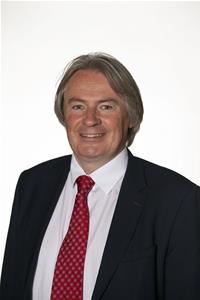




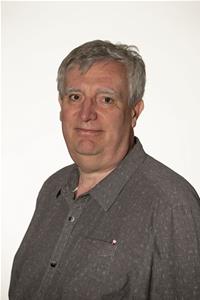



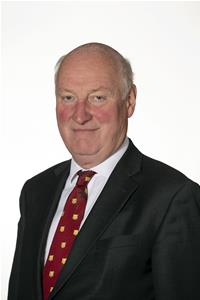



Topics
No topics have been identified for this meeting yet.
Meeting Documents
Additional Documents