Subscribe to updates
You'll receive weekly summaries about Cardiff Council every week.
If you have any requests or comments please let us know at community@opencouncil.network. We can also provide custom updates on particular topics across councils.
Policy Review and Performance Scrutiny Committee - Wednesday, 4th December, 2024 4.30 pm
December 4, 2024 Policy Review and Performance Scrutiny Committee View on council websiteSummary
Open Council Network is an independent organisation. We report on Cardiff and are not the council. About us
The Policy Review and Performance Scrutiny Committee considered the Council’s Mid-Year Performance Report 2024/25 and progress in developing the Council’s new Corporate Property Strategy 2025-30. Members agreed to send their comments and recommendations to the relevant Cabinet Members.
Mid-Year Performance Assessment 2024/25
Members were advised that this was an opportunity to review the effectiveness and accuracy of the Council’s self-assessment of its performance. The Committee’s focus was on services related to the “Modernising and Integrating Our Public Services” wellbeing objective, which sits within the Committee’s remit.
The Leader of the Council, Councillor Huw Thomas, and the Chief Executive, Paul Orders, provided an overview of the Council’s progress against its corporate plan priorities and acknowledged the significant challenges arising from increased demand and cost pressures.
Members were advised that despite a 20% year-on-year increase in complaints made to the Council, the number of complaints escalated to the Ombudsman had remained broadly consistent. This was attributed to improvements in the Council’s complaints handling processes. The Committee heard that the increase in complaints had primarily been driven by waste management issues related to industrial action.
Members asked questions about the high rate of sickness absence among Council staff. The Committee heard that the Council’s sickness absence policy was consistent with other public organisations and that the Council had a range of support measures in place to help employees return to work.
Concerns were raised about the Council’s school budgets and capital investment in schools. The Leader acknowledged that while the Council was investing record amounts in schools, there were significant challenges in maintaining school buildings that were not part of the Council’s school rebuilding programme. The Committee heard that the Council was working with schools to identify efficiencies and that discussions were taking place with the Vale of Glamorgan Council and other partner authorities around education and the Middle-tier Review1.
The Committee heard that the Council’s economic development team was relatively small but had a significant impact, having successfully delivered a range of major projects. The Leader described the new Indoor Arena in Cardiff Bay as “a complex project that would transform the city’s visitor economy and drive growth and prosperity across South Wales.”
Members welcomed the number of cultural events taking place in the city but expressed concern about their accessibility for those on low incomes. The Leader explained that the Council was working to increase access to cultural events, particularly among young people, through initiatives such as Passport to the City , the Cardiff Commitment, and the Youth Service.
Members raised concerns about the length of time taken to install disability adaptations, and the impact this has on residents. The Committee heard that demand for adaptations was exceeding available resources and that the Council was tendering for additional contractor support to address this issue.
Corporate Property Strategy
The Committee heard a presentation on the Council’s new Corporate Property Strategy 2025-30, which will be considered by Cabinet in January 2025.
The Assistant Director of County Estates, Donna Jones, explained that the strategy set out a five-year plan for managing the Council’s operational and non-operational property assets.
The Committee heard that the strategy had five key priorities:
- Reducing running costs: The Council aims to reduce the running costs of its property estate by £600,000 over the next five years. This will be achieved through a range of measures, including rationalising the Council’s office estate and improving energy efficiency.
- Improving statutory compliance: The Council will ensure that a minimum of 80% of its property estate is compliant with statutory regulations. This will be achieved through a programme of regular inspections and maintenance.
- Reducing carbon emissions: The Council aims to reduce carbon emissions from its property estate by 40% over the next five years. This will be achieved through a range of measures, including investing in renewable energy and improving energy efficiency.
- Increasing rental income: The Council aims to increase rental income from its investment estate by £700,000 over the next five years. This will be achieved through a range of measures, including acquiring new properties and improving yields on existing properties.
- Generating capital receipts: The Council aims to generate £10 million in capital receipts from the sale of non-operational property assets over the next five years. This will be achieved through a programme of asset disposals.
Members discussed the management of vacant properties and property debt. They were advised that the Council had made significant improvements in these areas in recent years, and that property debt had decreased significantly.
Members also discussed the disposal of retail parades, the distribution of homeless accommodation across the city, and the community use of schools. Officers advised that the Council was working to ensure that its property assets were used effectively to support the delivery of its services.
The Committee heard that the Council had invested significantly in health and safety resources, and that this had brought real benefits, particularly in the school estate. Officers were confident that they had the resources they needed to manage the Council’s property portfolio effectively.
Members were advised that the target for capital receipts was realistic over five years but that there could be a high level of variability year-to-year. The annual property plan gives the flexibility to bring in other assets should they become available.
Members questioned the rental target of £700,000. They were advised that the target was an approximately 20% increase over five years. It is a cautious target and there is further analysis to be undertaken.
Members were advised that a significant proportion of income from the base investment estate was from ground rents, over which the Council has little control as they are determined by RPI, turnover and other factors.
-
The Middle-Tier Review is a Welsh Government review of the roles and responsibilities of local authorities in education. ↩
Attendees
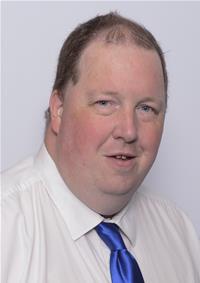





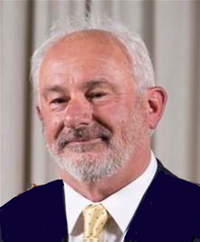
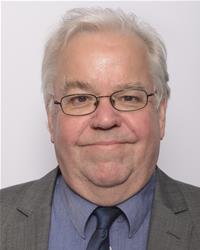

Topics
No topics have been identified for this meeting yet.
Meeting Documents
Reports Pack
Additional Documents