Subscribe to updates
You'll receive weekly summaries about Southwark Council every week.
If you have any requests or comments please let us know at community@opencouncil.network. We can also provide custom updates on particular topics across councils.
Environment, Community Safety and Engagement Scrutiny Commission - Wednesday 16 July 2025 7.00 pm
July 16, 2025 Environment, Community Safety and Engagement Scrutiny Commission View on council websiteSummary
Open Council Network is an independent organisation. We report on Southwark and are not the council. About us
The Environment, Community Safety and Engagement Scrutiny Commission met on 16 July 2025 to discuss the council's customer experience plan, the cabinet response to a biodiversity scrutiny review, and the Streets for People zoning consultation. Also on the agenda was discussion of playground policy and the commission's work programme.
Here's a summary of the topics that were scheduled to be discussed.
Biodiversity Scrutiny Review
The Environment Scrutiny Commission was scheduled to consider the cabinet response to the Biodiversity Scrutiny Review that the commission completed the previous year.
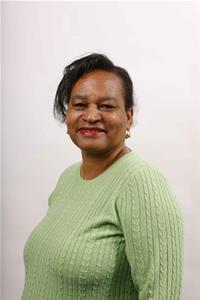
Councillor Portia Mwangangye, Cabinet Member for Leisure, Parks and Young People, noted in her foreword to the cabinet response that Southwark Council has long recognised that protecting and enhancing biodiversity is crucial to the wellbeing of the borough. She also noted that biodiversity is in crisis, with species and habitats declining both globally and nationally.
The cabinet was asked to approve the report as the council's response to the 34 recommendations put forward by the Environment Scrutiny Commission. The cabinet was also asked to accept 10 recommendations and partially accept 24 recommendations.
The report broke down each of the commission's recommendations and detailed the cabinet's response to each.
Recommendation 1 stated that the council should:
Adopt the Biodiversity COP 15 commitment known as 30x30, which calls for the effective protection and management of 30% of the world's land, fresh waters and oceans by the year 2030, as a strategic local aim. Adopt also, the Kunming-Montreal Global Biodiversity Framework (GBF) which aims to
catalyse, enable and galvanize urgent and transformative action.
The cabinet response stated that they agreed that developing future biodiversity policies and strategies in line with international frameworks and agreements would boost the profile of biodiversity and help incorporate biodiversity considerations across all council departments and functions. However, they noted that a commitment to protecting 30% of Southwark's land for nature by 2030 would require cross-departmental commitments and collaboration with external landowners, and that a scoping exercise would first be necessary to determine whether meeting 30x30 is realistic in Southwark, given the significant competing demands for land. For this reason, the cabinet only partially accepted recommendation 1.
Recommendation 2 stated that the council should prioritise development of a Green Infrastructure Strategy to map out a coherent Ecological Network for Southwark, which:
- Maps current Sites of Importance for Nature Conservation (SINCs) and green and blue spaces
- Identifies opportunities to increase the size of current SINCs.
- Joins up or enhances connections between wildlife SINCs, either through physical corridors, or through 'stepping stones'.
- Aids the creation of new wildlife SINCs
- Reduces the pressures on wildlife by improving the wider environment, including through buffer-zones around wildlife SINCs
The cabinet response stated that taking account of ecological connectivity is a priority in several council policies, including the Southwark Plan1 and Climate Change Action Plan. They also noted that they are working towards reviewing SINCs and other habitat opportunities across the borough through a borough-wide ecological survey, with the possibility of increasing their size and number. For these reasons, the cabinet only partially accepted recommendation 2.
Recommendation 3 stated that the council should improve the engagement, governance and oversight of the Southwark Nature Action Plan (SNAP) by putting forward a Terms of Reference document, for the Southwark Biodiversity Partnership to consider and adopt, as it sees fit. The cabinet response stated that the Southwark Biodiversity Partnership is composed of multiple organisations who would need to collectively agree on any Terms of Reference, or whether they want to contribute to an annual report, and that this is not a council decision. For this reason, the cabinet only partially accepted recommendation 3.
Recommendation 4 stated that the council should explore methods of delivering biodiversity improvements through the Planning process, beyond the minimum 10% Biodiversity Net Gain2 (BNG) specified in the Environment Act 2021 when undertaking the 2027 review of the Southwark Plan and through Special Planning Documents (SPD). This should be combined with more ambitious Urban Greening Factor3 (UGF) targets. The cabinet response stated that the GLA sets out the Urban Green Factor (UGF) in Policy G5 Urban Greening of the London Plan and Urban Greening Factor London Plan Guidance, and that all local authorities will need to align with this guidance. For this reason, the cabinet only partially accepted recommendation 4.
Recommendation 5 stated that wherever possible new major residential developments should be conditioned to include grey water recycling and rainwater harvesting, including providing for storage of rainwater in water butts or similar to support community gardening and food growing. The cabinet response stated that the Climate and Environment SPD has been updated to encourage the inclusion of food growing spaces to support community gardening and for the provision of access to water for this purpose. For this reason, the cabinet only partially accepted recommendation 5.
Recommendation 6 stated that the council should explore how domestic planning applications could be conditioned or, at least, applicants could be encouraged to include wildlife friendly features such as green roofs, flow-through planters, rain gardens, swift bricks, insect houses and water butts, and to minimise impermeable hard surfacing. The cabinet response stated that mandatory BNG is not legally required for householder applications, and that the Householder SPD has been amended to include a section on biodiversity enhancements which are appropriate for residents. For this reason, the cabinet only partially accepted recommendation 6.
Recommendation 7 stated that the council should update the draft Climate and Environment Supplementary Planning Document (SPD) and Householder SPD to incorporate the review recommendations. The cabinet response stated that the Climate and Environment SPD includes a section on Biodiversity, open space and greening, and that the Householder Development SPD has been revised to include a section on biodiversity and how it can be encouraged onsite. For this reason, the cabinet only partially accepted recommendation 7.
Recommendation 8 stated that the council should adopt the full dark sky recommendations from All-Party Parliamentary Group (APPG) Dark Skies Policy Plan including standards on the setting, brightness, colour temperature and density of lighting. The cabinet response stated that the London Plan Policy D8 Public Realm sets out that lighting, including for advertisements, should be carefully considered and well-designed to minimise intrusive lighting infrastructure and reduce light pollution. For this reason, the cabinet only partially accepted recommendation 8.
Recommendation 9 stated that the council should conduct an ecological audit of our parks, estates, verges, schools, sports fields, and pockets of land in order to increase habitat for wildlife and adopt wildlife friendly practices, in conjunction with the development of Ecological Networks. The cabinet response stated that the council are currently undertaking a borough-wide habitat survey and SINC review, and that this will both audit existing wildlife sites but also identify and assess new sites for designation. For this reason, the cabinet only partially accepted recommendation 9.
Recommendation 10 stated that the council should undertake a mapping exercise with ward councillors and community stakeholders to identify further land that is currently or can potentially be enhanced for biodiversity, and consider how undesignated open space, such as land currently used for parked vehicles, estate lands, schools, sports field borders, and rooftops, could be transformed and/or managed as places for nature as well as people. The cabinet accepted this recommendation.
Recommendation 11 stated that when allocating funding for Council projects, ensure that the budget covers the costs of the appropriate number of council officers, including experienced project managers and others who are trained in biodiversity improvements. The cabinet accepted this recommendation.
Recommendation 12 stated that the council should adopt de-paved as default, wherever possible, in all new Streetscape or housing schemes, and increase our greenspace by de-paving the many unused areas of existing hardstanding to make room for 'pocket parks', new street trees, hedgerows, rain gardens, food growing spaces and other forms of new planting. The cabinet response stated that the Streets for People programme is identifying the usage and network value of roads, identifying where the possibility exists to de-pave and return streets to a more natural function. For this reason, the cabinet only partially accepted recommendation 12.
Recommendation 13 stated that the council should adopt a default position that recognises installation of Vehicle Footway Crossovers (VFCs) and associated hard standings as an environmental and social ill which stands at odds with council policies including the Climate Emergency Action Plan, the Climate Emergency Resilience and Adaptation Plan, the Streets for People strategy and the Equal Pavements Pledge. The cabinet response stated that it is unlikely that a change to our Planning Policy will be approved to effectively prohibit vehicle accesses to private properties as legal advice declares this to be unlawful. For this reason, the cabinet only partially accepted recommendation 13.
Recommendation 14 stated that the council should make Southwark a pesticide free borough, to protect biodiversity and to protect our residents from the inherent harms of pesticides, taking a staged approach to eliminating pesticide use from our streets and estates, following on from the elimination of pesticide use from our parks several years ago. The cabinet response stated that pesticide reduction is an objective in the Climate Action Plan; however, a council-wide pesticide reduction strategy has not yet been formally adopted. For this reason, the cabinet only partially accepted recommendation 14.
Recommendation 15 stated that the council should proactively encourage and enable the installation (including retrofitting) of well-designed, wildlife-friendly green roof systems on buildings and structures. The cabinet response stated that biodiverse green roofs are regularly secured by planning condition whenever appropriate, and that green roofs are encouraged through the Urban Green Factor and biodiversity net gain. For this reason, the cabinet only partially accepted recommendation 15.
Recommendation 16 stated that new trees should be considered as part of a larger habitat design and more priority given to their contribution to local ecology and the wider Ecological Network, and that where possible, trees should be co-located with other trees and planting, in larger pits or schemes, and in conjunction with SuDs, wherever possible. The cabinet response stated that where new and replacement tree planting takes place consideration is always given to providing larger tree pits, soil cells and integrating SuDs schemes, but that this is however influenced by existing immovable onsite constraints such as utilities, footway widths or buildings. For this reason, the cabinet only partially accepted recommendation 16.
Recommendation 17 stated that the council should mandate biodiverse-friendly planting and maintenance in all new schemes including pocket parks, larger park planting schemes and SuDS, and that all new contracts approved through Trees, Housing, Parks, Planning or Highways should be chosen to explicitly enhance and maintain biodiversity. The cabinet response stated that Ecology and Tree officers regularly support Highways, Housing and Project teams during the design and implementation of new planting schemes to ensure they consider biodiversity along with maintenance and environmental factors. For this reason, the cabinet only partially accepted recommendation 17.
Recommendation 18 stated that the council should improve the active management of SINCs. The cabinet accepted this recommendation.
Recommendation 19 stated that the council should conduct systematic and periodic ecological audits of our parks, estates, verges pockets of land and SINCS, using targeted trial applications of AIbased bioacoustic monitoring devices, and use the information collected to develop more targeted biodiversity protection and support practices and policies. The cabinet response stated that the council continuously strives to improve our biodiversity monitoring, to ensure there is proper evidence to support decision making around ecology, and that wherever possible we support residents and organisations to monitor nature across the borough. For this reason, the cabinet only partially accepted recommendation 19.
Recommendation 20 stated that the council should increase blue habitat, especially in areas where there are gaps by expanding the areas of marginal habitat around the borough's rivers and ponds, and increasing the number of ponds and wetlands, including temporary ponds. The cabinet response stated that they strive to expand wetland habitat and building ponds wherever possible, but that any new freshwater habitats must consider long term sustainability, for example ensuring ponds aren't reliant on mains water connections, and management plans are in place. For this reason, the cabinet only partially accepted recommendation 20.
Recommendation 21 stated that Southwark should pursue the Water Framework Directive Good Ecological Status
for all remaining above ground waterways, such as the Peck. The cabinet response stated that none of the above or below ground waterways in Southwark (excluding the Thames) are currently assessed by Environment Agency as per the Water Framework Directive. For this reason, the cabinet only partially accepted recommendation 21.
Recommendation 22 stated that the council should provide, recognise, and protect routes for use by wildlife only, as well as for use for active travel, with reference to the work Southwark Nature Action Volunteers (SNAV) have done on wildlife corridors for nature and people, as part of the broader piece of work on Ecological Networks. The cabinet response stated that taking account of ecological connectivity is a priority for several council policies, including the Southwark Plan and Climate Change Action Plan, and that the council will endeavour to support projects that are in strategic locations for habitat networks. For this reason, the cabinet only partially accepted recommendation 22.
Recommendation 23 stated that Southwark should work with the GLA to adopt clearer definitions and requirements for nature-friendly green
corridors, for example including guidelines for minimum widths, sizes, spacing, target species, and types of soil and planting. The cabinet response stated that defining ideal requirements for ecological connectivity is something that can be considered within our next biodiversity strategy (next iteration of the SNAP), following the LNRS produced by the GLA, and that the Southwark Biodiversity Partnership will be a key consultee on this strategy. For this reason, the cabinet only partially accepted recommendation 23.
Recommendation 24 stated that the council should encourage, enable and support community and volunteer management of nature, wherever there is interest, as well as reducing costs, this will increase social benefit, educate and enhance the sustainability of wildlife friendly habitat. The cabinet accepted this recommendation.
Recommendation 25 stated that the council should develop a training programme on biodiversity and wildlife friendly management of green and blue space, targeted at officers and contractors across all relevant roles and grades, suited to their job roles, and that this should be an integral part of the staff training already required to ensure that all areas of council policy are seen through the prism of the Climate Emergency and extended to include the Biodiversity Emergency. The cabinet accepted this recommendation.
Recommendation 26 stated that the council should proactively promote Southwark's ambition to address the biodiversity emergency and explain steps that the council is taking and plans to take to achieve that end, and develop a programme to engage residents in the appreciation of and connection to nature. The cabinet accepted this recommendation.
Recommendation 27 stated that the council should actively promote wildlife gardening to residents. The cabinet accepted this recommendation.
Recommendation 28 stated that the council should develop ambitious cross borough Ecological Networks and particularly consider the ecological and social potential of daylighting more of Southwark's Rivers and increasing marginal habitat. The cabinet response stated that officers regularly network with officers from other Boroughs, through the London Borough Biodiversity Forum and London Tree Officers Association, and that the production of the London Local Nature Recovery Strategy by the GLA, on which Southwark is a consultee, is defining a pan-London ecological network and promoting cross-borough approaches to biodiversity enhancement. For this reason, the cabinet only partially accepted recommendation 28.
Recommendation 29 stated that the council should make Southwark a Right to Grow
borough, taking a motion to Southwark Council Assembly adopting 'The Right to Grow'. The cabinet accepted this recommendation.
Recommendation 30 stated that the council should map food growing plots. The cabinet response stated that the Community Gardening service maps existing gardens rather than potential gardens, and that currently they assist enquiries from residents about particular pieces of land – to help identify the landowner. For this reason, the cabinet only partially accepted recommendation 30.
Recommendation 31 stated that the council should update the SNAP to include a community garden plan, which includes the right for residents to have a garden, orchard, or food growing plots on their estate, and include details on how Southwark can support urban agriculture to increase biodiversity. The cabinet response stated that work is underway to review and then update the SNAP with a new biodiversity action plan, following the publication of the London Local Nature Recovery Strategy (LNRS), which will guide the structure of the Council's biodiversity strategies. For this reason, the cabinet only partially accepted recommendation 31.
Recommendation 32 stated that the council should develop a Community Gardening / urban food growing policy and include links to creating local markets and the planning system. The cabinet accepted this recommendation.
Recommendation 33 stated that the council should undertake to support Agroecology through food procurement. The cabinet response stated that the Southwark Sustainable Food Strategy (2023-2026) outlines the vision for a sustainable food system in Southwark, and that this strategy includes the key aim to promote and provide planet-healthy diets. For this reason, the cabinet only partially accepted recommendation 33.
Recommendation 34 stated that the council should work with the Capital Growth network to monitor and measure how food growing projects in Southwark are improving biodiversity and helping to tackle the ecological emergency. The cabinet accepted this recommendation.
Customer Experience Plan 2025-2030
The Environment, Community Safety and Engagement Committee was scheduled to note the details of the Customer Experience Plan 2025-2030.
The Customer Experience Plan (CEP) was shaped by feedback from residents, businesses, and staff on their interactions with council services. While universal services such as council tax and waste collection are generally well-received, non-universal services often require repeated contact, with concerns around responsiveness, especially for high-stakes issues like housing.
Councillor Stephanie Cryan, Cabinet Member for Equalities, Democracy & Finance, noted in the foreword to the plan that residents' overall perception of the council can be influenced by a single experience of requesting a service or speaking with a member of staff. She also noted that residents perceive the council as one entity but find that their experience of its services is sometimes fragmented, and that despite all the progress of recent years, the council can still do much better.
The plan focuses on reducing avoidable contact, with a specific focus on customer journeys where resident satisfaction with their experience is lowest.
The Customer Experience Plan is driven by four key pillars:
- Transforming Customer Experience
- Enhanced Digital Experience
- Responsive Customer Experience
- Supporting our Vulnerable Residents
The Customer Experience Action Plan outlines Southwark Council's approach for enhancing customer experience for those engaging with the Council and its services. The Council prioritizes improving customer experience across all services, and the implementation of the Action Plan will commence immediately.
Streets for People - Zoning Consultation
The commission was scheduled to discuss the Streets for People - Zoning Consultation.
Playgrounds
The commission was scheduled to discuss playgrounds.
Work Programme
The commission was scheduled to discuss its work programme.
-
The Southwark Plan is a document that sets out the council's planning policies and guides development in the borough. ↩
-
Biodiversity Net Gain (BNG) is an approach to development that aims to leave the natural environment in a measurably better state than it was before. ↩
-
Urban Greening Factor (UGF) is a tool used to measure the amount and quality of green space in urban developments. ↩






Topics
No topics have been identified for this meeting yet.
Meeting Documents
Reports Pack
Additional Documents