Limited support for Westmorland and Furness
We do not currently provide detailed weekly summaries for Westmorland and Furness Council. Running the service is expensive, and we need to cover our costs.
You can still subscribe!
If you're a professional subscriber and need support for this council, get in touch with us at community@opencouncil.network and we can enable it for you.
If you're a resident, subscribe below and we'll start sending you updates when they're available. We're enabling councils rapidly across the UK in order of demand, so the more people who subscribe to your council, the sooner we'll be able to support it.
If you represent this council and would like to have it supported, please contact us at community@opencouncil.network.
Summary
Open Council Network is an independent organisation. We report on Westmorland and Furness and are not the council. About us
At a meeting on 29 September 2025, Westmorland and Furness Council's Cabinet decided that it was 'minded to' consent to the creation of a Mayoral Combined Authority (MCA) for Cumbria, working jointly with Cumberland Council. This decision will be reviewed by the Corporate Overview & Scrutiny Committee and the Council, before a final decision is made on 14 October. If approved, the MCA would be established in early 2026, and Cumbria's first mayor would be elected in May 2027.
Mayoral Combined Authority for Cumbria
The Cabinet considered a report from Councillor Jonathan Brook, Leader of the Council and Cabinet Member for Economy, regarding the creation of a Mayoral Combined Authority for Cumbria. The Cabinet was asked to decide whether Westmorland and Furness Council should consent to the government's proposal. The decision was whether to confirm that the Cabinet was minded to give its consent, or to withhold it. This initial decision would be subject to consideration by the Corporate Overview & Scrutiny Committee on 30 September and the Council on 9 October, before a final decision on 14 October.
Councillor Brook said that the government had set an ambitious agenda for the reform of local government in England, and that a Mayoral Combined Authority would fundamentally change the local government landscape in Cumbria. He said that the paper before the Cabinet set out the issues that needed to be taken into account, including national policy, financial implications, local political and governance considerations, risks and benefits, and the views of local people and partners. He said that the decision came down to whether Westmorland and Furness was better served by consenting now, giving the council time to prepare, or delaying and having this imposed by the government at a later date.
The Chief Legal and Monitoring Officer, Linda Jones, updated the Cabinet that the English Devolution and Community Empowerment Bill was debated at the second reading on 2 September and sent to the Public Bill Committee, which would scrutinise the Bill line by line and was expected to report to the House by 12 November. She also noted that a second statutory instrument would be made covering the Police Fire and Crime Commissioner (PFCC) and its functions, and that there would be statutory committees of Overview and Scrutiny and also an Audit Committee.
Other Cabinet members commented:
- The Cabinet Member for Highways and ICT said that the government wanted more investment in Cumbria, and that the public would want what the Mayoral Combined Authority would bring. He could not see any benefit to Cumbria being the only authority without a mayor.
- The Cabinet Member for Transport and Regulatory Services said that although he did not necessarily agree that a Mayoral Combined Authority was the best option for local government reform, it was the only option currently 'on the table', and he would be supporting it so that residents and businesses in Westmorland and Furness would not miss out on any possible increased funding.
- The Cabinet Member for Finance and Deputy Leader, Councillor Andrew Jarvis, said that he had given considerable thought to the issue and could see good reasons both for and against giving consent, but had concluded that he was now prepared to support the proposal, although with considerable apprehension and scepticism. He said that giving consent was now the least bad option facing the council. He said that he was not a fan of the mayoral option, had significant concerns about the workload on council officers and members, and was concerned that the proposed funding formula worked against small areas, while there was a dreadful omission of the devolution powers on rural issues to the MCA.
- The Cabinet Member for Children's Services, Education and Skills said that on balance she had decided to support the proposal, although her preference would have been for the Joint Executive Committee to have evolved into a Combined Authority. She recognised the need for strategic planning of issues such as economic development and skills, and transport, to be done on a wider footprint than one council area. She did not feel that Cumberland and Westmorland and Furness were big enough, and would have preferred to include West Lancashire, especially because it could have easily included health services. She understood that being part of a Combined Authority would give the authority a seat on regional bodies and would enable it to get access to larger investment, and hoped that the money promised would materialise and that there would not be additional charges (or only minimal) to local council tax payers.
- The Cabinet Member for Adult Care said that she had tried to look at the issue from a resident's point of view, and that while they were unlikely to welcome another layer of local government, they did want better transport, and for Cumbria to thrive economically, and to become a great place for people to want to work and live.
- The Cabinet Member for Climate, Biodiversity and Environmental Services said that one of the things which needed to be considered was public opinion, and that he had concerns that when the public consultation was carried out the view was mixed. He said that the council would need to find a way to show residents that the money coming in would be spent for the benefit of all the residents in order to change their views.
- The Cabinet Member for Housing and Community Safety said that she felt that staff within the council were still trying to transform services following the last local government reform, and that she was concerned about the effect this may have on staff. However, she would be supporting the consent decision as she felt this would be the best deal for the residents of Westmorland and Furness Council.
- The Cabinet Member for Communities, Customer Services, Culture and Communications said she was minded to give consent because she firmly believed devolution was an opportunity, and would help drive economic growth and address inequalities to the benefit of both residents and businesses, especially young people.
Councillor Brook said that he felt that if the council was to say no, there would be reputational damage for Cumbria, in the eyes of business and government.
The Cabinet then voted to agree to Option 1, that Cabinet was minded to give its consent to the establishment of the Cumbria Mayoral Combined Authority.
Minutes of the Previous Meeting
The minutes of the previous meeting held on 9 September 2025 were approved as a true and accurate record. Councillor Giles Archibald, Cabinet Member for Climate, Biodiversity and Environmental Services, asked when the full response would be sent to the participant who asked the question about Teal Close. The Chief Legal and Monitoring Officer, Linda Jones, responded that this was being prepared by the legal team in conjunction with colleagues in the relevant directorates, and would be shared with Councillor Archibald and local councillors once it was finalised.
Other Matters
There were no questions to cabinet members, referrals from committees, representations from locality boards, or urgent items of business.
Attendees

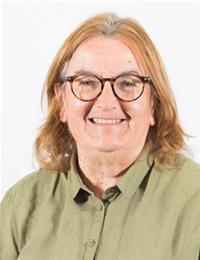



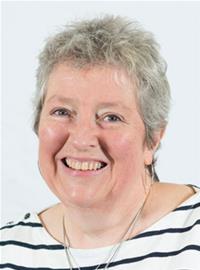


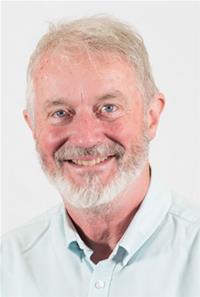
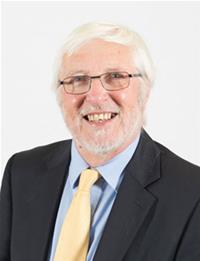
Topics
No topics have been identified for this meeting yet.
Meeting Documents
Reports Pack
Additional Documents