Subscribe to updates
You'll receive weekly summaries about Southwark Council every week.
If you have any requests or comments please let us know at community@opencouncil.network. We can also provide custom updates on particular topics across councils.
Prefer no ads? Become a Supporter for £3.50/month
Environment, Community Safety and Engagement Scrutiny Commission - Wednesday 15 October 2025 7.00 pm
October 15, 2025 Environment, Community Safety and Engagement Scrutiny Commission View on council websiteSummary
Open Council Network is an independent organisation. We report on Southwark and are not the council. About us
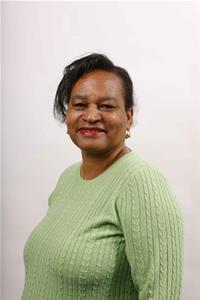
Here is a summary of the agenda for the Environment, Community Safety and Engagement Scrutiny Commission meeting on 15 October 2025. The meeting was scheduled to cover a range of topics, including a review of play spaces, an interview with Councillor Portia Mwangangye, Cabinet Member for Leisure, Parks & Young People, and a discussion on active travel and access to nature. The commission was also expected to discuss the Streets for People zoning consultation and review its work programme.
Play Spaces Review
A significant portion of the meeting was dedicated to the play spaces review, with evidence presented by Nadine Peters, Trustee, and Imogen Clark, Associate, from Make Space for Girls. The organisation had provided a report as evidence, and were scheduled to present their findings in person. Fiona Sutherland from London Play was also expected to attend and provide evidence for the review.
Make Space for Girls is a registered charity campaigning to improve parks and public spaces for teenage girls, young women, and gender-diverse young people. Their report highlighted the gender imbalance in existing teen play provision, noting that:
90% of council provision for teenagers consists of multiuse games areas (MUGAs) and skateparks; 92% of the teen users of MUGAs are boys and young men; as are 84% of the teen users of skateparks.
The report argued that there is a need to move beyond the traditional MUGA and skatepark, and to design spaces that are welcoming to teenage girls, young women, and gender-diverse young people. They suggest that facilities such as sociable seating and shelters, things to climb on, things to swing off, reading nooks and book exchanges, stages/raised platforms and spaces for multiple groups could be more inclusive. The report also emphasised the importance of safety in teenage play, noting that many teenage girls do not feel safe in parks. The report makes a number of recommendations for councils to improve teenage play, including:
- Spreading the word within the council
- Being prepared to explain to external community and stakeholders
- Partnering with local community groups
- Engaging with teenage girls and gender diverse young people about teen play spaces
- Using the Public Sector Equality Duty1 to support changing teen provision
- Reviewing tender processes and challenge suppliers
- Identifying barriers in existing policy documents
- Using new policies to support more inclusive spaces
Interview with Councillor Portia Mwangangye
Councillor Portia Mwangangye, Cabinet Member for Leisure, Parks & Young People, was scheduled to be interviewed on various aspects of her portfolio. These included:
- Management of leisure centres, swimming pools and gyms
- Management of multi-sport, athletics, football, tennis and cycling facilities
- Support for grassroots sports and the council's relationship with local sports clubs
- The council's libraries, heritage and archives service
- Parks, green spaces, adventure play, playgrounds, including on the council's estates
- Tree planting and maintenance, and increasing biodiversity and nature
- Community gardening, food-growing and allotments, including on the councils' estates
Streets for People - Zoning Consultation
The Streets for People programme was to be discussed again, specifically in relation to zoning. The Streets for People strategy aims to reduce the dominance of motor traffic and create more space for walking, wheeling and cycling.
Active Travel and Access to Nature
The final report from the previous year's Environment Scrutiny Commission, titled Exploring the Physical and Mental Health and Wellbeing Impacts of Active Travel and Access to Nature, was included in the report pack. The report highlighted the importance of active travel and access to nature as key public health policies. It noted that physical activity improves health, and that active travel through green space is the most beneficial for health and wellbeing. The report also explored the barriers to accessing active travel and nature, particularly amongst residents with protected characteristics. The report made a number of recommendations, including:
- Establishing a working group to integrate health benefits of active travel and access to nature into the council's public health function
- Amplifying and building the capacity of local community and voluntary groups working to make active travel more inclusive
- Prioritising access to active travel and nature in areas of higher deprivation
- Conducting research to better understand the practical and cultural barriers to increasing active travel and recreational time in nature
- Designing and expanding bespoke activities/events/walks aimed at particular groups
- Ensuring that walking, wheeling and cycling infrastructure is fully accessible
- Increasing availability of cycle training
- Exploring ways to link active travel and working in nature to social recognition, career pathways, professional success and financial prosperity
- Exploring grant funding to lower the cost to disabled people of owning an adapted/accessible cycle
- Lobbying the government to have bikes recognised as mobility aids
- Targeting cycle storage and hangers where they are most needed
- Rolling out residents' parking permits on estates on the same basis as on-street parking
- Ensuring that cycle storage facilities are located in areas which are well lit and overlooked
- Working with e-conveyance providers to improve parking
- Reducing maximum speeds of e-conveyances through geo-fencing at locations where riders share space with pedestrians
- Exploring partnerships with operators to improve access amongst lower income groups
- Ensuring greater emphasis on inclusion and well-being in nature-based activities
- Focusing on ensuring that people from marginalised communities have access to community gardens
- Actively promoting the Centre for Wildlife Gardening's offer to local schools
- Commissioning a mental health programme that links children and young people to nature
- Expanding the community gardening team
- Recognising and publicising the significant public health benefits of green space
- Ensuring that new green space is proactively designed with input from ecology officers and landscape designers
- Including community food growing within non-mandatory planning advice
- Identifying other potential spaces that could be used for community gardening
- Taking steps to publicise, mitigate and reduce the harms of pet insecticide treatments
- Designing public space to maximise safety, durability, permeability, aesthetics, and ease of disassembly and re-use
- Ensuring that the materials used in public realm improvements are of a high quality, safety, durability and aesthetic value
- Making utilities companies aware that the council is increasingly moving away from the use of tarmac in enhanced public spaces
- Ensuring that employees and contractors engaged in excavation of the highway and other public space are made fully aware of the need to ensure prompt and like for like reinstatement
- Where surface materials displaced during excavation cannot be reused during reinstatement, utilities companies shall be obliged purchase like materials to ensure full reinstatement within due time (6 months)
- Limiting the palette of surface paving materials deployed in the public realm and explore the possibility of retaining small stocks of these materials to ensure availability of supply to utilities companies where required following excavation
Work Programme
The commission was scheduled to note the work programme and consider the addition of new items or the allocation of previously identified items to specific meeting dates. The work programme listed a number of items for consideration in 2025-26, including:
- Playspaces review
- Customer Experience Plan pre scrutiny
- Streets for People – zoning consultation
- Fly-tipping officer report to coincide with interview with Deputy Cabinet Member for Cleaner Southwark
- Recycling rates and Food recycling – update on pilot , implementation and lessons learnt
- Climate Emergency strategy and action plan update
- Community Safety Independent review
- CCTV
- Phone snatching
- Policing oversight board
- Energy review update briefing paper
- Flooding and resilience
- Green Finance update briefing paper
- The Thames and opportunities to increase biodiversity and recreation along the foreshore
The work programme also included a list of standing items, such as interviews with cabinet members and the Borough Commander.
-
The Public Sector Equality Duty is a legal obligation that councils must comply with when exercising public functions, whether that is taking decisions, setting policies or providing services. It protects people by recognising that there are certain personal characteristics which can lead to discrimination or disadvantage within society. These are referred to as the
protected characteristics
and include sex (referring to male/female/man/woman/boy/girl). ↩




Topics
No topics have been identified for this meeting yet.
Meeting Documents
Reports Pack