Limited support for St. Helens
We do not currently provide detailed weekly summaries for St. Helens Council. Running the service is expensive, and we need to cover our costs.
You can still subscribe!
If you're a professional subscriber and need support for this council, get in touch with us at community@opencouncil.network and we can enable it for you.
If you're a resident, subscribe below and we'll start sending you updates when they're available. We're enabling councils rapidly across the UK in order of demand, so the more people who subscribe to your council, the sooner we'll be able to support it.
If you represent this council and would like to have it supported, please contact us at community@opencouncil.network.
Standards Committee - Monday, 8th July, 2024 4.00 pm
July 8, 2024 Standards Committee View on council website Watch video of meeting Read transcript (Professional subscription required)Summary
Open Council Network is an independent organisation. We report on St. Helens and are not the council. About us
The Standards Committee of St Helens Council met and noted a report from the Local Government and Social Care Ombudsman about complaints made about the Council. They also noted a report on training and development for Councillors. Finally, they discussed the revised Members ICT Protocol and Guidance on Use of Social Media for Elected Members, and voted to recommend the new protocol to full council for adoption.
Member Training and Development Update
The committee received a report from officers on training and development undertaken by members of the council.
Councillor Bell thanked the training staff, but raised concerns about low attendance on some courses:
It concerns me when I look at the attendance that not enough members are taking this up, and I think we have a duty to drive that forward.
Councillor Baines agreed and explained that training was essential for Councillors to do their jobs well:
...the better trained we are as 48 elected representatives, not members of any party, as 48 representatives, the best service that we can give to our residents.
Local Government and Social Care Ombudsman Complaints Update
The committee noted a report from the Local Government and Social Care Ombudsman (LGSCO)1 which showed a reduction in the number of complaints being investigated when compared with the same period last year.
Revived Members ICT Protocol and Guidance on Use of Social Media for Elected Members
The committee reviewed the Council's Members ICT Protocol, which had last been updated in 2017. The new protocol included updated guidance on the use of social media by councillors.
Councillor Bell successfully proposed an amendment to the protocol that clarifies the responsibility Councillors have for content posted by others on their social media pages. She said:
...where it says around using a Facebook page, that you are responsible for the information that is posted and remains on your Facebook page... If a resident posts a racist meme or a homophobic meme on your page, or hate-filled meme or post, as an elected member, that page is your responsibility and you should remove that post and not leave it up there.
Councillor Baines agreed with the change, noting that Councillors from all parties had got into trouble because of their use of social media in recent elections.
Councillor Carmack was also supportive, and highlighted the importance of the change, saying:
...once it's there, it is there for life and it can be found and you can be held accountable and you should be held accountable for any homophobic, racist, sectarian comments that you make that are injurious to another person's health and wellbeing.
Councillor Maloney drew attention to the similarities between the new protocol's guidance on offensive content and the Council's mandatory training on unconscious bias.
Code of Conduct, Conduct Complaints Against Elected Members
The committee reviewed complaints made against Councillors under the Council's Code of Conduct2.
18 complaints had been received since the last meeting of the committee, including one about a Parish Councillor. Five of the complaints, including one from the previous reporting period, were dismissed by the Monitoring Officer3 as it was decided that it would not be in the public interest to investigate them. A further 5 complaints were resolved informally, mainly by the subject member agreeing to remove a social media post, or to apologise for their conduct. 9 complaints remained under consideration.
Councillor Bell asked how long on average it took to investigate a complaint, and whether there was any training available to members about what an appropriate complaint was, noting that:
...we are from a member to member perspective, we are in a political environment, where debates will get heated. And we should expect to be able to manage that and not take it personally.
Councillor Bell went on to say that the line between acceptable and unacceptable behaviour was being blurred:
...if I'm so a male counsellor challenges me in the chamber, that isn't misogyny, because he's challenging a woman... But if he said to me, you know, you don't know anything about that because you're a woman, then that's misogyny. And I think that's where the line is getting blurred.
Councillor Carmack argued against training, saying:
I would be concerned about giving people training on what would be the basis for a complaint. I would rather have training for people to recognise where they will breach the code of conduct and what they're saying.
Councillor Maloney suggested that the existing training on unconscious bias covered this.
Responding to Councillor Bell, the Monitoring Officer agreed to raise the issue of what constitutes a valid complaint as part of the Council's Code of Conduct refresher training, but explained that robust political debate was acceptable:
But what we always do say is that robust political debate is exactly that. But if complaints are personally offensive, that's what warrants complaints. And I'd probably say the vast majority of these relate to comments that are perceived to be personally offensive.
The Monitoring Officer confirmed that they did receive complaints from members of the public, and agreed with Councillor Bell that investigations took longer than they would like because of the number of complaints. She also said that she had other duties and responsibilities that meant she could deal with complaints more quickly if there were fewer of them.
Councillor Baines expressed concern at the amount of time the Monitoring Officer spent dealing with complaints:
...the monitoring officer is nobody's parents in this authority and neither is she a referee. I'm too much of a time spent dealing with things that she shouldn't be dealing with.
-
The Local Government and Social Care Ombudsman is an independent body that investigates complaints about councils in England. ↩
-
This link goes to a search page on the St Helens Council website because they do not publish their Code of Conduct on a single page. ↩
-
The Monitoring Officer is a statutory officer, appointed by every local authority in the UK. They are responsible for maintaining the register of members’ interests, advising the authority on matters relating to ethics and standards, and for being the council's point of contact for the Electoral Commission. ↩
Attendees
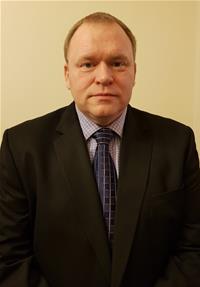
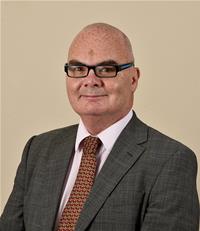
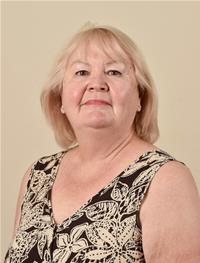


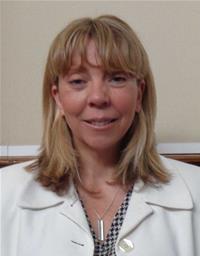


Topics
No topics have been identified for this meeting yet.
Meeting Documents
Additional Documents