Subscribe to updates
You'll receive weekly summaries about Swansea Council every week.
If you have any requests or comments please let us know at community@opencouncil.network. We can also provide custom updates on particular topics across councils.
Swansea Council
October 24, 2024 View on council websiteSummary
Open Council Network is an independent organisation. We report on Swansea and are not the council. About us
The Economy and Infrastructure Service Transformation Committee met on Thursday 24 October 2024 to discuss active travel maintenance and the council's work plan. The committee heard that while Swansea Council has been successful in securing funding for new active travel infrastructure, there is a significant challenge in maintaining these routes due to a lack of dedicated funding. The committee also reviewed and approved its work plan for the upcoming year.
Active Travel Maintenance
The committee discussed the significant challenges in maintaining Swansea's extensive active travel network, which spans nearly 150 kilometres. While the Welsh Government's Active Travel Fund provides capital for the development and delivery of new routes, it explicitly does not cover maintenance costs. This responsibility falls to the local authority, placing considerable pressure on the budgets of the Highways Maintenance and Parks and Cleansing departments.
Stephen Williams, an active travel officer at Swansea Council, explained that the Active Travel (Wales) Act 2013 requires local authorities to continuously improve active travel infrastructure. He highlighted that while the council has secured substantial funding for new routes, the revenue costs for their upkeep must be met internally. This has led to difficulties in managing the existing network, with both Highways Maintenance and Parks and Cleansing departments citing issues with inadequate mapping and categorisation of routes, as well as the need for unadopted routes to be formally adopted.
Councillor Philip Downing, Chair of the committee, expressed his astonishment that funding for maintenance was not built into the schemes, noting that he, like other councillors, regularly receives complaints about overgrown or poorly maintained routes. He suggested that the council should engage with the Welsh Government to address this funding gap.
Concerns were raised about the increasing costs of maintenance, the potential for third-party claims against the council due to substandard infrastructure, and the need for winter maintenance on cycle routes. It was noted that the cost of repairing a single incident of damage could potentially consume the entire annual repair budget.
The Parks and Cleansing department estimated that £100,000 per year is spent on maintenance, with an additional £60,000 per year being spent on unfunded routes on a best-endeavour overtime basis. Both departments stressed the need for clear mapping and data to accurately assess maintenance burdens.
Councillor Mike White questioned the wording regarding routes needing to be on adopted land, and asked which department would be responsible for specific maintenance issues, such as a tree branch lifting a path. It was clarified that highways would handle hard surface maintenance, while the revenue cost for staff time was the primary issue.
Councillor Ryland Doyle, Councillor Champion for Walking, emphasised that active travel routes are not just for cyclists but benefit a wider range of users, including pedestrians, those with visual impairments, wheelchair users, and parents with prams. He also highlighted the importance of accessible infrastructure, such as dropped kerbs, and the challenges posed by environmental factors like sand blowing onto paths, as seen along the seafront.
The committee discussed the need for a one council approach
to maintenance, where any identified problem is addressed promptly without inter-departmental disputes. There was a general consensus that the mapping of the active travel network is a crucial first step to understanding the full extent of maintenance requirements and associated costs.
Councillor Will Thomas raised the issue of smaller, joining-up
schemes that could encourage more people to travel actively, suggesting that funding for these smaller interventions might be difficult to secure. Stephen Williams confirmed that such small schemes, including dropped kerbs and pathways in parks, are sometimes funded through the Active Travel Fund, and that the council can package these smaller requests for funding bids. He also noted that councillors' community budgets could be used for such improvements.
The committee was informed that the Active Travel Fund deadline for bids is 20 December, and that the council would be submitting bids for potential funding, though it was anticipated that the available funding might be reduced from the previous year.
Ultimately, no immediate funding was allocated for active travel maintenance. The report indicated that any additional resources would need to be accommodated from the budget recommended to the Council in March 2025. The committee agreed to bring a further paper to a future meeting once the mapping exercise is complete and more definitive costings are available.
Work Plan
The committee reviewed and approved its draft work plan for 2024-2025. A key decision was to schedule a further update on the Shared Prosperity Fund for the meeting on 12 December 2024. The work plan also includes future discussions on the Highways Asset Management Plan, Improving Public Toilets, and various strategy reviews.
Attendees

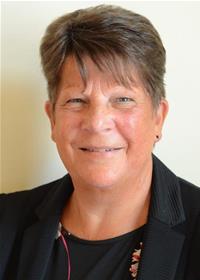
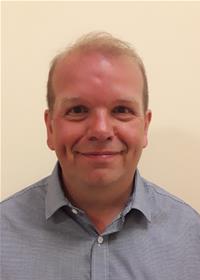
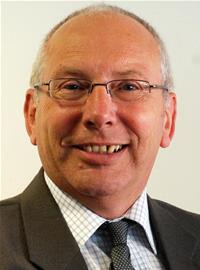
Topics
Meeting Documents
Agenda
Reports Pack
Additional Documents