Subscribe to updates
You'll receive weekly summaries about Hertfordshire Council every week.
If you have any requests or comments please let us know at community@opencouncil.network. We can also provide custom updates on particular topics across councils.
County Council - Tuesday, 9 December 2025 10.00 am
December 9, 2025 County Council View on council websiteSummary
Open Council Network is an independent organisation. We report on Hertfordshire and are not the council. About us
The County Council meeting on Tuesday, 9 December 2025, saw a significant debate on the future of street lighting in Hertfordshire, culminating in a decision to review the current policy. The council also discussed and approved proposals for devolution, aiming to establish Hertfordshire as a Mayoral Strategic Authority to unlock growth and secure funding. Additionally, a motion to introduce a default 20mph speed limit near school entrances was carried, alongside a commitment to review the road adoption process.
Street Lighting Policy Review
A petition signed by over 1,000 residents, Leave Our Street Lights On At Night,
prompted a lengthy debate on Hertfordshire's street lighting policy. The petition argued that the savings from dimming and switching off lights after 1 am were tiny and piffling
compared to the heightened anxiety and fear caused, particularly among women.
Councillor Stephen Giles-Medhurst OBE, Executive Member for Highways, clarified that the policy of Part Night Lighting (PNL) had been in place for over a decade, implemented in 2012 and amended in 2018 and 2020. He stated that the current adjustments involved approximately 1,293 streetlights, representing only about 1% of the total, and that these lights are only switched off between 1 am and 5 am. He also highlighted that the policy had saved the council around £3.6 million annually and that there was no evidence of negative impacts on road safety or crime rates.
Despite these assurances, the petition highlighted concerns about safety, particularly for vulnerable residents. Councillor Matt Cowley, speaking for the Conservative group, supported a review, stating that Street lighting does have a real impact. You know, that ability for people to go about the place where they live at all times, feeling safe and secure is really important.
Councillor Peter Collier, proposing an amendment for the Reform UK group, suggested innovative solutions like solar panels fitted to lampposts to reduce running costs and carbon emissions, and the use of Passive Infrared (PIR) sensors to activate lights only when needed. Councillor Alexander Curtis, speaking for the Conservative group, proposed an amendment to allow members to use their Highways Locality Budget for new street lighting, arguing that Members should be able to take a discretionary decision to install new streetlighting on roads they deem appropriate.
Ultimately, the council voted to carry the substantive motion, which called for a county-wide review of the street lighting policy, examining its impact on safety, accessibility, health, and equality, and to consult with residents and other stakeholders. The amendments proposed by the Reform UK and Conservative groups were lost.
Devolution Ambitions for Hertfordshire
The council debated and approved a motion to progress towards establishing Hertfordshire as a Mayoral Strategic Authority (MSA) at the earliest opportunity. Councillor Steve Jarvis, Leader of the Council, presented the report, emphasizing that devolution offers an opportunity for growth and improved services for Hertfordshire residents. He highlighted that Hertfordshire is missing out on significant funding opportunities, such as the £900 million Local Growth Fund, because it does not currently have a Mayoral Strategic Authority.
Councillor Richard Roberts, Leader of the Conservative Group, moved an amendment expressing concerns about the government's unclear timelines and funding for devolution, arguing for more clarity before committing to a specific path. He stated, The government has only last week, in fact, after this agenda was in fact published, delayed the mayoral elections in part of the country. Now, why did it do that? It either can't cope. It's either bitten off more than it can chew.
Despite the amendment, the substantive motion was carried, signalling the council's commitment to pursuing a Mayoral Strategic Authority, with the aim of unlocking benefits for the county's residents and businesses.
Introduction of 20mph Speed Limits Near Schools
A motion proposed by Councillor Michael Blissett of the Reform UK group, calling for a reduction in the speed limit on the A1000 outside Sherrards Wood School in Wellington Garden City from 70mph to 40mph, was debated and ultimately carried with amendments. The motion highlighted the long-standing campaign by the school community, citing numerous accidents and safety concerns.
Councillor Stephen Giles-Medhurst OBE, Executive Member for Highways, moved a Liberal Democrat amendment, accepting the need for a speed reduction and confirming that the council was already moving quickly to implement a permanent traffic regulation order to reduce the speed limit to 40mph. He explained that a temporary order would not expedite the process and could even cause delays. Councillor Tony Kingsbury, speaking on behalf of the Conservative group, supported the motion with his amendment, emphasizing the need for a permanent solution and thanking Councillor Blissett for his campaigning.
After considerable debate and several amendments, the motion, as doubly amended, was carried with one abstention. This means that a default 20mph speed limit will be introduced on all roads directly adjacent to the main entrances of schools in Hertfordshire, subject to traffic assessments and signage. Exceptions will only be made with compelling evidence, and criteria for these exceptions will be agreed by the Environment, Transport and Growth Cabinet Panel. Funding for signage, enforcement, and awareness campaigns will be considered in the next budget cycle.
Review of Road Adoption Procedures
A motion submitted by the Labour group, concerning unadopted roads in Hertfordshire, was debated and amended before being carried. The motion highlighted issues faced by residents in areas with unadopted roads, including fly-tipping, poor lighting maintenance, and anti-social behaviour. It also noted the lack of a clear process for road adoption, causing confusion and frustration.
The motion, as amended, calls for a comprehensive report detailing the number and percentage of unadopted roads, a review of current procedures to improve transparency and accountability, and a commitment to prioritise the adoption of roads. It also requests that the Executive Member for Environment, Transport and Growth write to the Chancellor of the Exchequer for capital funding for maintenance of newly adopted roads and to the Secretary of State for Housing, Communities and Local Government to amend the National Planning Policy Framework to make the delivery of adoptable roads a planning condition.
Other Key Discussions:
- Appointment of Vice-Chair of Overview and Scrutiny Committee: Councillor Caroline Clapper was appointed as the Reform UK Group Vice-Chair of the Overview and Scrutiny Committee.
- Local Government Reorganisation: The council held an indicative vote on its preferred option for local government reorganisation, with the two-unitary authority (2UA) option receiving the most support. The council also expressed opposition to the government's
flawed, rushed and disruptive process.
- Motion on the Economy: A Conservative motion calling for tax reductions to stimulate economic growth and for reports on the state of Hertfordshire's economy was defeated.
- Questions to Executive Members: A range of questions were asked of executive members on topics including the council's corporate plan, asylum seeker accommodation costs, school closures, street lighting, devolution, public health, adult social care, and children's services.
- Report from Overview and Scrutiny Committee: The committee reported on its work, including a special meeting convened to examine voting arrangements for local government reorganisation. Recommendations included establishing a working party to review standing orders and ensuring group leaders' meetings precede full council meetings.
- Report from Health Scrutiny Committee: The committee discussed mental health services, blood test waiting times, and the upcoming reorganisation of Integrated Care Boards. It recommended writing to the Secretary of State for Health and Social Care to support funding for adult acute mental health beds and to the ICB for an update on blood test waiting times.
- Revisions to Constitution: Proposed amendments to Standing Order 6.4, concerning the process for questions at Cabinet meetings, were debated. The amendments aimed to ensure rotation of questioners among political groups and to clarify the scope of questions. The proposed amendments were lost, and the original motion to revise the standing orders was carried.
- Appointment of Honorary Aldermen: In a separate, celebratory meeting held on 26 November, the council appointed several new Honorary Aldermen in recognition of their distinguished service.
The meeting concluded with the Chairman wishing everyone a happy Christmas and New Year, and announcing the next meeting would be on 17 February 2026.
Attendees






































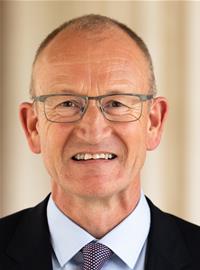






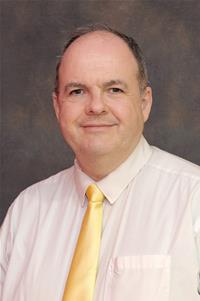







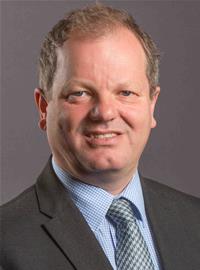






Topics
No topics have been identified for this meeting yet.
Meeting Documents
Agenda