Subscribe to updates
You'll receive weekly summaries about Buckinghamshire Council every week.
If you have any requests or comments please let us know at community@opencouncil.network. We can also provide custom updates on particular topics across councils.
Summary
Open Council Network is an independent organisation. We report on Buckinghamshire and are not the council. About us
Here is a summary of the Buckinghamshire Council cabinet meeting scheduled for Tuesday 9 September 2025. The cabinet was scheduled to discuss and make decisions on topics including the Buckinghamshire Economic Growth Plan, revisions to the Statement of Community Involvement, the disposal of council-owned property, and strategies for youth justice, SEND1, and children's services. They were also scheduled to discuss adult social care services, and the draft of the Local Plan for Buckinghamshire.
Buckinghamshire Economic Growth Plan 2025-2035
The cabinet was asked to approve and endorse the Buckinghamshire Economic Growth Plan 2025-2035. According to the agenda, the plan is intended to deliver the Buckinghamshire Growth Board’s ambitions to increase economic growth and productivity to 2035. The plan was shaped by the Buckinghamshire Growth Board, and builds on the economic ambitions set out in the Bucks Strategic Vision for 2050. The agenda states that the Economic Growth Plan refreshes and updates Buckinghamshire’s 2019 Local Industrial Strategy and aligns with the UK Industrial Strategy published in June 2025. It focuses on addressing productivity challenges, articulating growth potential to 2035, and guiding development of investment propositions which contribute to economic growth and deliver high-quality job opportunities. The plan is scheduled to be launched at the Buckinghamshire Economic Summit in September, to promote Buckinghamshire as a place to invest.
Revision of the Statement of Community Involvement
The cabinet was asked to consider updates to the Statement of Community Involvement (SCI). The SCI is described in the agenda as:
a protocol for how local authorities would engage with their communities in the preparation of Local Development Documents (LDDs) such as local and neighbourhood plans, and the consideration of planning applications and planning enforcement matters.
The council is required by law to produce and keep the SCI up to date. The proposed revisions follow legal advice received from King’s Counsel (KC) in July 2025. The advice explained that the existing Buckinghamshire SCI implied that the council was committed to consultation on a ‘full’ draft of the Local Plan at the Regulation 18 stage, which was contrary to what the council was proposing to consult on. The proposed amendment to the SCI clarifies that at Regulation 18 stage, the council will consult on parts of the draft local plan, and that the council will not be consulting on the entirety of the draft local plan.
Disposal of council-owned property asset in High Wycombe
The cabinet was asked to authorise the Corporate Director for Resources to proceed with a disposal of all the council’s land ownership in and around its Council Offices on Queen Victoria Road in High Wycombe. The marketing strategy was to conduct an open market campaign seeking Conditional and Unconditional offers for the entire site. The objective was to attract a broad range of bids for the entire site. The agenda notes that conditional offers are likely to achieve a higher capital receipt for the council, but the receipt would be delayed by planning and other conditions attached to the offer. An unconditional sale would provide a quicker receipt and reduce ongoing holding costs. Control on the nature of the development would be through the planning process, not as historic landowner. The financial target was the priority, particularly achieving the figure currently budgeted for in the council’s Medium Term Financial Plan (MTFP). Bids would also be evaluated to determine which offer best meets the council’s overall objectives for the disposal of the entire site including financial, and contribution to both the economic growth prospects, regeneration, and social benefits to High Wycombe.
Adult Day Opportunities and Overnight Respite Services
The cabinet was scheduled to discuss a post-consultation report on the future Adult Social Care service model for day opportunities and overnight respite for adults with care and support needs. The council had conducted a 15-week public consultation, and the recommended approach had changed in consideration of this feedback, alongside further analysis on alternative options. The council wants personalised and inclusive support to be offered to everyone in need so that people are empowered. This might be through support to access community facilities, supported employment, volunteering or other practical support. A smaller cohort of adults with more complex needs would always need access to high quality building-based care and support at centres across the county. The current service model was unsustainable and outdated, with an overreliance on building-based provision to meet needs. The council-run services focused on the traditional building-based day centre services alone and were underutilised. The new service model would enable the council to deliver cost-effective services, delivering an estimated full year annual adult social care saving of £1.081m by 2028/2029. The new recommended service model included the following key changes:
- Supporting adults with multiple and complex needs to access support at the retained council-owned centres
- Setting up a dedicated learning disabilities team in adult social care to enhance specialist support
- Opening a new additional specialist overnight respite centre for adults under 65 in Aylesbury to provide better geographical coverage across the county, alongside the retained facility in Beaconsfield (Seeleys House)
- Upgrading facilities at all retained council-owned and retained centres
- Opening new additional provision for up to 30 young people with special educational needs and disabilities to access a local college from repurposing Buckingham Day Centre.
The council recognised that for those adults who attended centres proposed for closure, this would have a significant impact in transition. The council was committed to working with adults and carers to minimise disruption and individualised plans would be put in place for all adults where moves were required. The council would continue to provide care and support for all adults at the centres proposed for closure. All adults affected could be supported at a retained council run centre. The cabinet was asked to agree to operate a specialist support service for adults aged 18-64 with care and support needs from four sites: Aylesbury Opportunities Centre, Chesham Day Centre, Spring Valley Day Centre and Seeleys House. They were also asked to agree to discontinue providing adult social care day services at three sites: Buckingham Day Centre, Hillcrest Day Centre, Burnham Day Centre, noting that all adults supported from those sites will continue to receive suitable alternative care and support. The cabinet was also asked to agree to seek a sale for the Burnham and Hillcrest Day Centre buildings through the council’s disposal process, including inviting community groups to purchase Burnham Day Centre.
Approval of draft Local Plan for Buckinghamshire for public consultation from September 2025
The cabinet was asked to approve a draft version of the Local Plan for Buckinghamshire for a six-week public consultation from 17 September 2025. The consultation sought comments on the approach to the spatial strategy for meeting housing and employment needs, supported by a series of Development Management policies. The agenda notes that it was not possible, at this stage, to consult on a full draft version of the Local Plan containing preferred or proposed site allocations because further technical studies were required.
SEND and Inclusion Strategy 2025 – 2030
The cabinet was asked to approve the final Special Educational Needs and Disabilities (SEND) and Inclusion Strategy 2025-2030 for publication. The strategy is described as the key document underpinning the improvement and transformation of the support and services provided for children and young people with SEND and their families in Buckinghamshire. It sets out the council’s collective ambitions across Education, Health and Care to improve the experiences and outcomes of children and young people. It has been developed by key stakeholders including parent/carer representatives, partners and children and young people who have collaborated on its content.
Ofsted Recommendations Improvement Plan
The cabinet was asked to note the outcome of the recent Ofsted inspection of services for children in need of help and protection, children looked after and care leavers. Following the December 2021 ‘requires improvement’ judgement, Ofsted recently conducted an inspection of local authority services for children in need of help and protection, children looked after and care leavers. While the outcome of the inspection remained consistent with the judgement published in 2022, with an overall assessment of ‘requires improvement to be good’, this inspection found the experiences and progress of children in care to be ‘good’. The agenda notes that the inspection findings reflected the council’s own self-assessment and acknowledged there had been improvement in the delivery of services since December 2021, including a strengthened response to previous recommendations and a consolidation of practice across most areas including the delivery of services for the most vulnerable children. The council has developed a plan to address areas requiring further development.
Buckinghamshire Youth Justice and Support Team (YJST) Plan 2025-26
The cabinet was asked to endorse the 2025-2026 Youth Justice Plan and recommend it to council for adoption. The Youth Justice Plan provides details of progress made against statutory outcomes for children and young people. It outlines priorities, alongside potential future challenges for the partnership over the coming year. The plan demonstrates the strength of practice, commitment and approach from the service alongside the partnership which has supported to achieve strong outcome measures against National Indicators and supported to improve the lives of children, families and victims.
Question Time
Councillor Robin Stuchbury asked Councillor Peter Strachan, Deputy Leader and Cabinet Member for Planning a question in relation to developments that require a planning application, VALP2 planning policy (15) and building regulations in relation to the capacity of the existing sewerage systems. Councillor Robin Stuchbury asked if the cabinet would consider asking the government to review Section 94 of the Water Industries Act 1991, which provides developers with the right to connect to public systems regardless of capacity issues, and Section 91(1) of the Act, which effectively makes it impossible for water companies to object or for the council to refuse or grant permission for development on the grounds that no improvement works are planned for a particular area, especially in relation to sewage capacity.
Delegated decisions linked to this meeting
Decision summaries below are AI-generated from the council’s published record. Check the council source or the full decision page before relying on them.
-
...to implement a new Adult Social Care service model involving operating specialist support from four sites, discontinuing day services at three sites while ensuring alternative care, establishing a new respite facility, allocating capital investment, repurposing a day centre for young adults with special needs, and seeking sales for two day centre buildings, deferring the marketing of one to allow community bids.
-
...to proceed with the disposal of council-owned land around the Council Offices on Queen Victoria Road in High Wycombe by delegating authority to the Corporate Director for Resources to market the site, appoint a marketing agent, approve a disposal budget, implement a communication plan, negotiate heads of terms, and produce a report with recommendations for Cabinet.
-
...to note both the outcome of the recent Ofsted inspection of services for children in need of help and protection, children looked after, and care leavers, and the associated Ofsted Recommendations Improvement Plan.
-
...to adopt the Buckinghamshire Economic Growth Plan 2025-2035 as the overarching plan to drive economic growth.
-
...to approve the final Special Educational Needs and Disabilities (SEND) and Inclusion Strategy 2025-2030 for publication.
-
...to approve the draft Local Plan (Parts A and B) for Buckinghamshire for a six-week public consultation starting in September 2025, and to delegate authority for minor amendments to the Corporate Director for Planning, Growth and Sustainability in consultation with the Deputy Leader and Cabinet Member for Planning.
-
...to adopt a revised Statement of Community Involvement (SCI) that clarifies the council will consult on parts of the draft local plan, rather than the entirety, at the Regulation 18 stage.
-
...to endorse the 2025-2026 Youth Justice Plan and recommend it to the Council for adoption.
Attendees



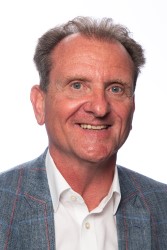


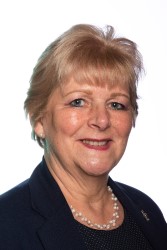



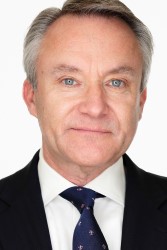




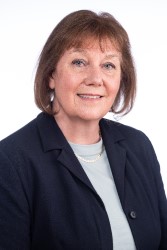
Topics
No topics have been identified for this meeting yet.